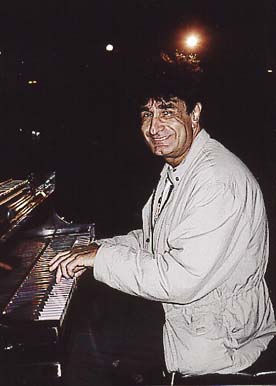
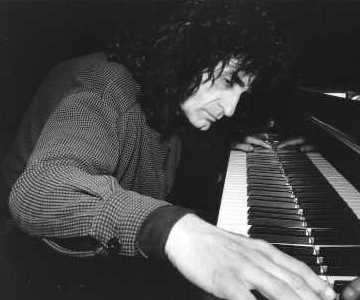
Although my first instrument was actually the violin, I prefer the piano as my main instrument.
I love harpsichord and church organ and, of course, I love all synthesizers,
analog and digital, as well as all sorts of percussion instruments, in
addition to my beloved Alpine Horn and trumpet. And there's nothing like a
Hammond organ and a real Moog synthesizer, or even a real Oberheim. When I
played the mellotron, I had special effects tapes of all my albums made and
was "playing" them through live concerts or different recordings like "on
cue" analog samplers. I liked that part of playing them too, because they
provided some very original
punctuations in the music.
John Coltrane was probably my deepest influence, along with Jimi Hendrix,
Elvin Jones, Bud Powell, Thelonious Monk, Mahalia Jackson, Ravi Shankar,
Art Tatum, Clifford Brown, Eric Dolphy, Oscar Peterson, John Lewis, Bill
Evans, Yehudi Menuhin, McCoy Tyner, THE BEATLES, Jimmy Smith, Keith Jarret,
Glenn Gould, Aldo Ciccolini, Georgy Cziffra, Dinu Lipatti and Clara Haskil,
with whom I worked as a child.
Very deep, spiritual and intense memories of some of the most magical
moments of my life spent in the company of such geniuses. On different
planes of "Spiritual Translations". I always felt attracted to and
influenced by their music.
Extremely difficult, especially because of regulations which had to do with
Immigration laws and Musician's Union rules, in addition to work permits and
special visas. It was very difficult at first as well because of language
barriers. Fortunately, music being a universal language, it was possible to
build "Bridges of Silence", magical pathways through the uncharted
territories of administrative and governmental jurisdictions. Having learned
the English language, and many others since, the situation improved
somewhat.
Well, I was involved in the Brazilian music scene and had recorded some of
my solo albums like the "The Story of i", "Out In The Sun" and "Patrick
Moraz/Primitivisation" there.
I had my own band with sixteen percussionists and keyboards and I was very active
in the recording and concerts scene. I had met Steve Hackett in Rio de
Janeiro, when he came there with GENESIS. Later, there were talks about
doing something with him and Steve Howe in GTR but for some reason that
never came about. I eventually joined THE MOODY BLUES.
I was not "stepping" in Rick's shoes, although that "figure
of speech" was used. In any case, I was extremely well received by fans and
critics alike and I felt that the response to my playing and contribution to
YES was positive throughout.
Almost, but not quite. THE NICE had been split-up for more than three years
when we formed REFUGEE. Also in REFUGEE, we were playing all original
music, which I composed for the group. So I did not have to copy or
replicate parts which had been recorded before me.
The only reference to THE NICE was the fact that I was playing with the
same rhythm section, Lee Jackson and Brian Davison, both excellent players
and showmen, as well as contributors to the group. I keep an excellent
memory of REFUGEE.
Both groups played progressive rock and even though the majority of the
music was based on my compositions, the end result was really a group
effort, especially in the arrangements.
Both groups MAINHORSE and REFUGEE had a different identity, however
MAINHORSE had a lead guitarist which made a big difference in the overall
sound. We also had much more vocal arrangements in MAINHORSE. But the
essence of the music was mine, in both groups.
I had never met Rick before joining YES. However I had met some of the
other YESmen, like Tony Kaye, Peter Banks, Jon Anderson, Chris Squire and
Bill Bruford.
I met Rick in the 80s outside London and we even played on the same stage
and jammed together in September 1991 and May 1992, in Florida, when we were
invited to play some benefit concerts for the "Give Kids the Word"
Foundation.
Both, personal contact with Jon Anderson which had been arranged by my very
good friend Ray Gomez, guitarist extraordinaire, also by Chris Welch, the
main journalist for the music paper "Melody Maker" and also through a
request by Brian Lane, YES's manager at that time. Then through the request
by the whole group. Apparently, it was a unanimous decision and the
invitation came quite instantly. The day after I played with them for the
very first time, I got a call telling me I was in the band as an
equal-member, and my presence was being requested immediately!
Personally, I wasn't sure I wanted to get into YES at the time because I
was doing film scores, (I was working on two movies at the same time, one
with my friend Gerard Depardieu) and I was still under professional
commitment with REFUGEE. Although we were on the verge of splitting-up REFUGEE, we still had some
concerts to do, promoting our first and only eponymous album "Refugee",
which had entered at #28 in the "Melody Maker" British Music Charts a few
weeks earlier and was still climbing.
When we started to record "Relayer", some of the music had already been
written and rehearsed by Chris, Jon, Steve and Alan. I contributed as much
as I could to the overall picture of the pieces. However, it is a fact that
Steve used quite a lot of tracks for his many overdubs everywhere on the
album, except when there is no guitar at all, which is a rare occasion.
We all participated in the compositions and the final arrangements, even if
most of the "songs" were originally composed somewhat more by Jon, and Steve
in some instances.
I liked to work with Jon and Chris, especially. Alan was always contributing
some very good rhythmic ideas. I also worked quite a lot with Steve during
the whole time I was in YES.
We had written, together, quite a lot of the material which ended up on
"Going For The One", like "Awaken", "Wondrous Stories" or even "Parallels" which were as
much part my composition as anyone else in the band at that time. I also
came up, during the two previous years prior to the recording of "Going For The One", with
a lot of ideas and contributions
to the band and its sound. The fact that I was not credited as a writer of
the songs, does not mean I did not compose for the group. As a member of
the band, I composed as much as I could, as much as I was "allowed" to
compose by the others.
Unfortunately, I was forced to leave. And even though, at the time,
the split "was not made to appear acrimonious", I suffered extremely and
extensively. To be "asked to leave" so suddenly put me in a lot of turmoil
and disturbance. The fact is, I was never compensated for anything. I never
ever got paid for any of my tour participation in the extremely successful
and extensive YES Tour of 1976, which comprised about 65 concerts, many of
them in front of sold-out audiences of more than 100,000 people. After all,
as a member of the band, I was entitled to a 20% cut from what the band was
getting.
I don't like to dwell into negatives, however, I can tell you that I had
absolutely no desire to want to leave YES, at the time, in November of
1976. We had just finished the biggest tour YES had ever done, the
"Bicentennial Tour", a huge, extremely successful tour for YES. Somehow, it
had been decided that we would go and record, in my own
country, Switzerland, what became the album "Going for the One", which we
had extensively composed, developed and rehearsed during the course of 1976
(and even before that). There was no reason in the world for me to want to
leave the band! Also, I understood, much later, that Rick was already in
town, with his own crew, when I was still in the group, and I was still part
of YES.
In addition, it was an extremely complicated and difficult situation for me
to be stranded, on the street, with my baby daughter who was only one-month
old and her mother, without any transport or money, in the cold winter of
Switzerland. Then the fight for survival to stay alive, it all became
surreal.
In the very early part of 1975 already, we somehow had discussed the idea of
doing, each and everyone of us, a solo album. Steve asked me if I wanted to
take part in his own "Beginnings" album.
I said,"Sure I would love to!" Then he gave me a tape with a few notes on it
and asked me if I could arrange and orchestrate it like Vivaldi.
I said I would do my best and I worked on it for about three weeks.
When I came to play him the demo and show him all the work I had done with
the piece, "Beginnings", he loved it immediately and he told me that we
would record it. And we did. I also played the harpsichord on some other
tunes with him on the album.
I also conducted the chamber orchestra for the recording sessions.
Of course, my arrangement sounded nothing like Vivaldi, but it had its own
personality and uniqueness to it. Steve (I remember the moment very well)
was kind of in shock and at the same time very happily surprised that I had
come up with the whole arrangement like that and wanted to use it
immediately, without any changes.
We recorded the whole session with Steve, on acoustic guitar. Along with my
final harpsichord parts, I conducted the orchestra, while he eventually
re-recorded his guitar parts at a later date. The video was taped also at
a later date.
I knew Bill somewhat before he had even left YES, in 1968. (He left in
early 1972). But it is more through Chris's solo album that I got to know Bill better. We actually played together for the first time in early 1976. Eventually, we met again in 1983, when we were living in the same village. We talked about doing an acoustic "piano and drums" duet.
That's how MORAZ-BRUDORD came about with the two albums: "Music for Piano
& Drums" and "Flags". We eventually toured the States and Canada in Summer
1983 and in 1984 we played England, Europe, Canada and USA. Then in 1985 we
played Japan, Europe, Canada and the States again. Our last concert ever as
MORAZ-BRUDORD took place at the Town Hall in New York City on September 30th
1985. The performance was sold-out.
The "Story Of i" is an allegory about Life and Beyond. It takes place in an
environment which implies the notion of virtuality. However, if the games
are artificially monitored and use technologies which go beyond what is
understood nowadays as "digital" and "virtual", the emotions are very real,
and the feelings are definitely human.
My third album, entitled simply "Patrick Moraz" (a wish of the record
company, at the time), uses the concept of
"Primitivism and Civilization".
The Harmony of the primitives, the struggle for survival, the arrival of the
machine world, the impact of the robotization on the human world, the
aliens' arrival and help to save the human race, the hope and the potential
co-existence of those worlds, on planet Earth. Originally entitled
"Primitivization", a neologism I created at the time, the entire album was
conceived as a ballet and features acoustic trans-cultural percussion as
well as acoustic keyboards and electronic synthesizers, vocoders and the
human voice.
The inspiration for "The Story Of i" came to me during the course of
an elevator ride in a newly-built hotel in America.
The idea implanted itself in a flash.
It immediately became clear that it was an allegory about life itself.
What came to me was a way to present an abstract and spiritual
train of thought under the guise of a concrete story, a kind of
"sci-fi" story with plenty of symbolic narratives and figurative twists,
with its own rites, games and rules as well as endless interactive
situations. Always with a hopeful goal, however, with eternal light in sight. A sort of modern times search for the ever-elusive Holy Grail.
For a first "concept" album, the task was formidable and
proved even more so as time passed. However, as the original idea was firmly rooted, the development of the whole work grew virtually at an exponential rate. All the elements came into place at the right time,
even if over a period of a few months.
I should have said "almost at the right time"...
A few timing problems and conflicting schedules presented themselves
towards the end of the recording and at mixing time.
Even, the emblem came to me like an "apparition", during one of the most
spiritual visionary encounters I have ever had.
In regards to approaching the recording of "Story Of i", like any of my
other recordings, first and foremost there were always a different "feeling", and different emotions. All the senses are alert. Even some sense of humor is indispensable! Being able to go to the "depth of my thoughts".
Different states of consciousness, different levels of awareness, also various mechanisms of creativity, spontaneity, improvisation and "composing in real time", cognitive memory, playing (or not) with other musicians, interacting with other people, psycho-acoustics, instruments, technology, geographical location, atmospheric conditions, and so forth.
By "composing in real time" I mean that "The Story Of i" was composed, arranged, orchestrated,
recorded and produced over a period of more than four months,
whereas "Future Memories. Live on TV, Vol.1" was instantly composed,
and performed as a "One Man Show", recorded, filmed on video,
mixed and produced in one day.
Oh, I thought "Hotel California" was released in 1978! What's for sure is
that "The Story Of i" was recorded mainly in 1975, and some of the
compositions were created as early as 1973 and 1974.
I would like that very much. They would have to be re-mastered digitally
though, if not re-mixed, that would be ideal. I would like to have all my
albums under the same "roof". In any case, I own all my works, they are all
copyrighted in my name,
so it's just a matter of time (and money, of course) to have them re-issued
and released.
I joined THE MOODY BLUES in the latter part of 1978. We only started the
tour in November of that year. Then in 1979, we only toured in part of the
early summer. We then prepared for some recording in the late summer of 1979, especially with Ray Thomas and Graeme Edge. Since I was leaving in Brazil, at that time, and recording two solo albums, "Coexistence" and "Future Memories", both recorded in Switzerland, and also composing for two movies and TV shows ("Le Chemin Perdu", directed by my sister
Patricia Moraz), there was no time for me to start recording with the
Moodies prior to February of 1980. When we started recording, with some
breaks in between, the album took almost a year to be finally produced and
ready to go.
I don't know about that! Since I was not part of the group anymore, I cannot
comment very much on that. However, I understand that, to replace me, they
added two keyboard players, another drummer in addition to the existing one,
two or three vocalists and even a whole symphony orchestra to play the
mellotron parts?
Bill was a good, disciplined drummer. Somewhat stiff, though.
Whereas other drummers I have played and recorded with like Alphonse Mouzon,
Richie Morales, John and Chad Wackerman as well as genius drummers Jacob
Armen and Ronnie Ciago for example, to name but a few, were not only
disciplined, but very loose too and can play just about anything.
All these guys have much more jazz, swing, funk, rock and power in them. In
"Flags", the second album we did together, under the name MORAZ-BRUFORD,
Bill recorded most of his drums to a click-track, overdubbing his parts to
my original compositions.
I didn't meet the other players while recording my piece, which was recorded
on January 19th, 1996 at "Mad Hatter" studio in Los Angeles.
However, I know most of the players personally, we are friends and I have
played and jammed with most of them, with Brian Auger, Keith Emerson,
Rick Wakeman, Jordan Ruddess and even David Bryan.
I chose to play that Chopin's Polonaise in A major because it was a piece
that my father, who used to work for Paderewski a long, long time ago, was
always talking to me about in the stories he remembered about the great
Polish pianist. Also, It was a piece which was not going to be played by
anyone else on that album after checking with the record company.
Yes, I did compose many scores for films, documentaries and even
commercials. I really enjoyed doing them. However, it's very different,
although the 'compositional' process might be the same. Let me explain. For
a movie, or for any "soundtrack", the end result is always "functional".
The composer has to create functional emotions, on cue and on budget. There
is the difference. When a musician/composer writes for an album which has, a
priori, no "function" other than the pure expression of the soul as an
Artform, the inspiration comes, most probably more from "within" or
"inside", as opposed to "outside" forms of inspiration such as suggestions
from a script or a scenario. In a "non-functional"
situation, there might be an imaginery scenario. In a functional one, even
if the scenario is imaginery, the "scenes" are real and the music score has
to fit that "reality". Of course, there is always the possibility to compose
the music before the film is shot, which I did many times, in the early
days, especially in Europe. I worked with film directors like Alain Tanner,("La Salamandre", "Le Milieu du Monde") and Claude Goretta ("The
Invitation" that received Grand Prix du Jury at Cannes Festival), and many others.
In any case, although I haven't done any new movie scores since 1991, I
think it can be very exciting, especially with the new technologies, and I
certainly want to write more film scores. That's going to happen sooner or
later.
In regards to "Predator" and "Wild Orchid", I only did some "temporary cues". Not the final scores.
I met with Arnold Schwarzenegger, yes, and went on location to Mexico
where they were filming the jungle scenes, in May 1986. Some pictures were
taken of us together, on the set, for promotional purposes. I think
"Predator" was more successful than "Wild Orchid".
As far as the latter is
concerned, I had met with Mickey Rourke prior to that movie and I met with
the producers and director.
You mean, am I going to join N'SYNC, the BACKSTREET BOYS, the Britney Spears
or the Shania Twain backing-band, or am I going to work with Madonna on
her next album, or am I going to co-write and perform some songs with David
Bowie, Phil Collins, Sting or Peter Gabriel, and even go on tour with U2?
Well, we never know, nothing is impossible. However, for the moment, I am
concentrating on my own projects and some new works commissioned for some
symphony orchestras and choirs. In the very near future, in addition to "Resonance", I am going to release
soon another solo piano CD entitled "E.S.P." (for "Etudes, Sonatas & Preludes"), and another electro-ethnic studio CD which I am just finishing as we speak, "A Way To Freedom", so to follow further information, please, check www.patrickmoraz.com.
Thanks for your interesting questions and my very best wishes to all your
readers. One of these days I'm going to tour over there, hopefully!
Интервью с ПАТРИКОМ МОРАЗОМ
Декабрь 2000
- Какие клавишные инструменты ты предпочитаешь - фортепьяно, орган или
синтезаторы - муг, меллотрон?
Хотя на самом деле я начинал играть на скрипке, в качестве основного
инструмента все же предпочитаю фортепьяно. Мне нравятся клавесин и церковный
орган и, конечно же, я люблю всяческие синтезаторы - как аналоговые, так и
дигитальные - и разные ударные инструменты - в добавку к обожаемому мной
альпийскому рожку и трубе. Но ничто не сравнится с органом "Хаммонд" и
подлинным синтезатором "Муг" или, более того, настоящим "Оберхаймом". Играя на
меллотроне, я использовал записи спецэффектов со всех своих альбомов (в
меллотроне используются ленты с записью четырех инструментов, "смешивающиеся"
при воспроизведении, - эдакий супермагнитофон, - Дм.М.Э.) и проигрывал их на
концертах и различных записях в качестве готовых аналоговых сэмплеров. Мне
нравилось проигрывать их, они придавали музыке некоторую оригинальную
пунктуацию.
- Кто оказал на тебя как на музыканта наибольшее влияние?
Думаю, что более всего на меня повлиял Джон Колтрейн, а также Джими
Хендрикс, Элвин Джонс, Бад Пауэлл, Телониус Монк, Махалия Джексон, Рави
Шнакар, Арт Тейтем, Клиффорд Браун, Эрик Долфи, Оскар Петерсон, Джон Льюис,
Билл Эванс, Иегуди Менухин, МакКой Тайнер, THE BEATLES, Джимми Смит, Кит
Джаррет, Глен Гульд, Альдо Чиккоилини, Джорджи Чиффра, Дину Липатти и Клара
Хаскил, с которой я работал будучи ребенком.
- Как тебе вспоминаются выступления перед такими гениями, как Телониус
Монк и Джон Колтрейн.
О волшебных мгновениях своей жизни, проведенных в компании этих гениев, я
сохранил очень глубокие, одухотворяющие и сильные воспоминания на разных
уровнях "духовной связи". Их музыка всегда меня привлекала и влияла на
меня.
- Тяжело ли было швейцарцу пробиться на рок-сцену, на которой
преобладают англо-американцы?
Невообразимо тяжело - особенно по части иммиграционных законов и
постановлений Союза музыкантов, не говоря уже о разрешению на работу и особых
визах. Также поначалу было трудно и из-за языкового барьера. К счастью, с
помощью универсального языка музыки стало возможным навести "мосты безмолвия",
волшебные тропинки, ведущие через неизведанные земли административной и
правительственной юриспруденции. С тех пор как я выучил английский и множество
других языков, положение в какой-то мере улучшилось.
- Кого ты считаешь своими соперниками на рок-сцене?
Таковых не имеется!
- Ты изучал бразильскую музыку - как и Стив Хаккетт. Что ты думаешь о
его альбоме "Till We Have Faces"? Не возникало ли у тебя мысли о совместной
работе?
Да, я имел дело с музыкальной сценой Бразилии и записал в этой стране
несколько своих сольных альбомов - "The Story of i", "Out in the Sun" и
"Patrick Moraz/Primitivisation". У меня была своя группа: шестнадцать
перкуссионистов и клавишные, и я принимал активное участие в записях и
концертах. Я встречал Стива Хаккетта, когда он приезжал в Рио-де-Жанейро с
GENESIS. Потом уже были разговоры о том, чтобы сделать что-нибудь в GTR вместе
с ним и Стивом Хау, но по некоторым причинам так ничего и не вышло. В конце
концов я присоединился к THE MOODY BLUES.
- Как поклонники реагировали на то, что ты занял место Рика
Уэйкмана?
Я не занимал место Уэйкмана, хотя использовалось именно эта фигура речи.
Как бы то ни было, и поклонники, и критики приняли меня весьма тепло, и я
чувствовал, как положительно они реагируют на мою игру и вклад в музыку YES.
- Не было ли это похоже на ситуацию с REFUGEE - THE NICE без Кита
Эмерсона?
Почти, но не совсем. THE NICE распались более чем за три года до того, как
мы создали REFUGEE. К тому же, в REFUGEE мы играли целиком оригинальную
музыку, сочиненную мною для этой группы. Так что мне не нужно было копировать
или воспроизводить партии, записанные до меня.
Единственное, что связывало меня с THE NICE, - то, что я играл с той же
ритм-секцией, Ли Джексоном и Брайаном Дэвисоном, великолепными музыкантами и
шоуменами, вносившими свой вклад в группу. У меня сохранились отличные
воспоминания о REFUGEE.
- А что за музыку играли REFUGEE и MAINHORSE?
Обе группы исполняли прогрессивный рок, и хотя музыка, в основном,
базировалась на моих сочинениях, конечный результат был по-настоящеиу
коллективным творением, особенно по части аранжировок.
Обе команды, MAINHORSE и REFUGEE, были одного толка, однако в MAINHORSE
присутствовал лидер-гитарист, что существенно сказывалось на общем звучании. В
MAINHORSE также мы уделяли больше внимания вокальным аранжировкам. Но, по
сути, музыка в обоих коллективах была моя.
- Был ли ты знаком с Уэйкманом до того, как присоединился к YES? Каковы
ваши отношения?
До своего прихода в YES я Рика не встречал. Хотя встречал других членов
колектива - Тони Кея, Питера Бэнкса, Джона Андерсона, Криса Скуайра и Билла
Бруфорда.
С Риком мы повстречались уже в восьмидесятые в пригороде Лондона, мы даже
играли на одной сцене и джемовали на пару во Флориде в сентябре 1991 года и в
мае 1992-го, когда нас пригласили принять участие в нескольких
благотворительных концертах в пользу фонда "Дайте слово детям".
- Как ты попал в YES - я имею в виду, через менеджмент или на основе
личных контактов?
И так, и этак. И через личный контакт с Джоном Андерсоном, с которым меня
связали мой близкий друг великолепнейший гитарист Рэй Гомез и основной
журналист музыкальной газеты "Melody Maker" Крис Уэлч, и по просьбе Брайана
Лейна, в то время - менеджера YES. А потом уже и по просьбе всей группы. Судя
по всему, меня выбрали единогласно, так что предложение последовало
практически незамедлительно. На следующий день после того, как мы впервые
сыграли вместе, мне позвонили, сообщив, что я принят как бы на полставки, и
попросили немедленно прибыть!
В глубине души я тогда не был уверен, что хочу присоединиться к YES, так как
был сильно занят сочинением музыки к кинофильмам (как раз в то время я работал
сразу над двумя лентами, в одной из которых снимался мой друг Жерар Депардье),
к тому же, я все еще был связан контрактом с REFUGEE. Хотя мы уже уже
находились на грани распада, нам еще нужно было отыграть несколько концертов
для раскрутки нашего первого и единственного одноименного альбома "Refugee",
который за пару недель до того попал на 28-ю позицию британского музыкального
хит-парада в "Melody Maker" и все еще продолжал подниматься.
- "Relayer" - просто великолепная работа. Однако не кажется ли тебе, что
тебе дали меньше пространства нежели Рику и что на альбоме преобладает гитара
Стива Хау?
Когда мы приступили к записи "Relayer", музыка уже была частично написана и
отрепетирована Крисом, Джоном, Стивом и Аланом. Я внес свою посильную лепту в
общую картину. Однако не секрет, что Стив по всему альбому использовал
максимальное количество дорожек для своих многочисленных наложений - за
исключением тех редких фрагментов, где гитары нет вообще.
Все композиции этого альбома подписаны всеми членами YES. С кем в
основном сочинял ты и кто тебе был ближе всего?
Мы все участвовали в сочинении и окончательных аранжировках, пусть даже
песни как таковые были изначально написаны по большей части Джоном и в
некоторых случаях Стивом.
Мне было особенно по душе работать с Джоном и Крисом. Алан всегда привносил
отличные идеи по части ритма. И все время, проведенное мною в YES, я много
сотрудничал со Стивом.
- Ты покинул YES в процессе создания материала для следующего диска,
"Going For The One". Что из написанного до твоего ухода попало на эту
пластинку?
Нами совместно написана достаточно большая доля материала, вошедшего в
"Foing For The One", - "Awaken", "Wondrous Stories" и даже "Parallels", в
которую я внес больше, чем кто-либо из членов коллектива. За два года,
предшествоваших записи "Going For The One", я внес достаточно много идей и
предложений, касавшихся группы и ее звучания. Тот факт, что я не был указан в
качестве автора песен, отнюдь не значит, что я не сочинял для ансамбля. В
качестве члена команды я сочинял столько, сколько было в моих силах, столько,
сколько мне позволяли сочинять остальные.
- Ты был вынужден уйти или же вы расстались полюбовно?
К сожалению, меня вынудили уйти. Однако, пусть даже в то время разрыв был
обставлен так, чтобы не выглядеть недружелюбным, я сильно, серьезно пострадал.
Столь внезапная просьба покинуть коллектив вылилась для меня в кучу
неприятностей и волнений. На самом деле мне так ничего и не компенсировали.
Мне не заплатили за мое участие в невероятно успешном и продолжительном туре
YES 1976 года, состоявшем из 65 концертов, многие из которых проходили при
полных залах и аудитории, превышающей 100 тысяч человек. А ведь мне как члену
коллектива причиталось 20 процентов от всех доходов ансамбля.
Мне не хотелось бы заострять внимание на негативных моментах, однако я могу
тебе сказать, что в то время, в ноябре 1976-го, у меня не было абсолютно
никакого желания уходить из YES. На тот момент мы только-только закончили
самый грандиозный из туров YES, "Bicentennial Tour", громадные, неимоверно
успешные гастроли. Отчего-то было принято решение ехать записывать то, что
вылилось в альбом "Going For The One" в мою родную страну, Швейцарию. Мы
усиленно сочиняли, развивали и репетировали в течение 1976 года - начав и того
раньше. У меня не было никакого повода хотеть бросить группу! Много позже я
понял, что в то время в городе уже был и Рик со своей командой, - а я все еще
был в ансамбле, все еще был частью YES.
Вдобавок ко всему, я очутился в весьма сложном и тяжелом положении, оказавшись
на улице с дочерью, которой тогда был только месяц, и ее матерью без
транспорта и каких бы то ни было средств к существованию посреди холодной
швейцарской зимы. Борьба за существование, за выживание выглядела очень
сюрреалистичной.
- Расскажи немного, пожалуйста, о своей работе на сольных альбомах
Хау.
В самом начале 1975-го, когда мы обсудили идею о том, чтобы каждый из нас
выпустил по сольному альбому, Стив спросил, не хочу ли я принять участие в его
диске "Beginnings". Я ответил: "Разумеется, с радостью!" Тогда он дал мне
ленту с несколькими нотами, попросив меня сделать аранжировку и оркестровку в
духе Вивальди. Пообещав приложить к этому все усилия, я приступил к работе,
которая заняла около трех недель. Когда я проиграл Стиву демонстрационную
запись и показал, все, что сделал, с композицией "Beginnings", он мгновенно
влюбился в нее и сказал, что так ее и запишет. Что он и сделал. Я также сыграл
на клавесине в еще нескольких композициях этого альбома.
Кроме того, во время записи я дирижировал камерных оркестром. Разумеется, моя
аранжировка совершенно не походила на Вивальди, она была по-своему
индивидуальна и уникальна. Стив - я хорошо помню это мгновение - был
практически в шоке и в то же время счастливо удивлен тем, что я сделал полную
аранжировку в этом духе и моментально решил использовать ее без малейших
изменений.
Мы записали целую сессию, Стив играл на акустической гитаре. Параллельно со
своими финальными клавесинными партиями я дирижировал оркестром, Стив же позже
перезаписал свои гитарные партии. Потом еще сняли и видео.
С Биллом Бруфордом ты познакомился благодаря этой работе?
Я был мимолетно знаком с Биллом еще до его ухода из YES, в 1968-м. (Билл
ушел в начале 1972-го.) Но намного лучше я его узнал во время записи сольного
альбома Криса - по-настоящему мы впервые сыграли вместе в начале 1976 года.
Потом мы снова встретились в 1983-м, когда жили в одной деревне, - тогда мы и
обсудили акустический дуэт фортепьяно и барабанов.
Так и родился проект MORAZ-BRUFORD, выпустивший два альбома: "Music for Piano
& Drums" и "Flags". Летом 1983 года мы гастролировали по Штатам и Канаде, в
1984-м играли в Англии, Европе, Канаде и США, в 1985-м - в Японии, Европе и
снова в Канаде и Штатах. Наш последний концерт в качестве MORAZ-BRUDORD
состоялся 30 сентября 1985 года в Нью=Йорке, в "Town Hall". Представление было
аншлаговым.
- Похоже, у каждой твоей сольной работы имеется собственная концепция.
Не мог ли бы ты обрисовать парочку тем?
"Story Of i" представляет собой аллегорию жизни и после-жизни. Действие
происходит в некой среде с намеком на виртуальность. Однако, если игры, в
которых мы принимаем несколько искусственное участие, используют технологии
выходящие за рамки того, что сейчас именуется "дигитальным" и "виртуальным",
то эмоции наши - весьма реальны, а чувства - определенно человеческие.
Мой третий альбом, названный просто "Patrick Moraz" (требование компании
грамзаписи), использует концепцию "Примитивизм и цивилизация". Он повествует о
гармонии примитивов, их борьбе за выживание, появлении мира машин, влиянии
роботизации на мир людей. На помощь людям прилетают инопланетяне, пытающиеся
спасти человечество, возродить надежду на потенциальное сосуществование обоих
миров на планете Земля. Изначально названный придуманным мною неологизмом
"Primitivization" альбом задумывался как балет, в него наряду с акустическими
клавишными и электронными синтезаторами, вокодерами и голосом вошли записи
ударных инструментов разных культур.
- Какова основная тема "i"? Мне кажется, ты был увлечен трудами
экзистенциалистов, не так ли?
Вдохновление написать "The Story Of i" пришло ко мне, когда я поднимался в
лифте в одном из американских отелей-новостроек. Это было словно озарение,
мгновенно стало ясно, что это и есть аллегория жизни как таковой. Я задумался
о том, чтобы представить абстрактный и духовный поток сознания в виде
конкретной истории, чего-то, вроде фантастического рассказа со множеством
символических текстовых фрагментов и метафор, со своими собственными
ритуалами, играми и уставами и безграничными интерактивными ситуациями. И при
этом - не упускать из виду надежду, вечный свет. Это должно было быть нечто
вроде современного поиска вечно ускользающего Святого Грааля. Для первого
концептуального альбома задача представлялась сложной - она оказалась еще
более тяжелой с течением времени. Впрочем, изначальная идея настолько
укоренилась, что работа росла практически в геометрической прогрессии. Все
фрагменты в нужное время встали на свои места - пускай даже для этого
понадобилось несколько месяцев.
Мне следовало сказать "почти в нужное
время"... Ближе к концу записи и во время микширования возникли некоторые
проблемы со временем и нестыкующимися расписаниями. Но даже эмблема альбома
явилась мне как "откровение" во время одного из наиболее духовных
видений.
Что касается подхода к записи "Story Of i", то - в отличие от прочих моих
пластинок - здесь, прежде всего, присутствовали другое чувство и иные эмоции.
Все чувства были обострены - даже чувство юмора! Для того, чтобы дойти до
"глубин своих мыслей", я должен был задействовать различные уровни сознания,
различные уровни познания, различные механизмы творчества, спонтанность,
умение импровизировать и сочинять "в реальном времени", память, способность
играть - или не играть - с другими музыкантами, взаимодействовать с другими
людьми, использовать психоакустику, инструменты, технологию, географическое
расположение, погоду и так далее.
Под "сочиненинием в реальном времени" я подразумеваю то, что альбом "The Story
Of i" сочинялся, аранжировывался, оркестровывался, записывался и
продюсировался на протяжении более четырех месяцев, в то время как "Future
Memories. Live on TV, Vol.1" был написан моментально и сыгран как сольное
представление, записанное, снятое на видео, смикшированное и спродюсированное
за один день.
- Не кажется ли тебе, что в сюжете альбома есть нечто общее с "Hotel
California" THE EAGLES - особенно если учесть, что обе пластинки вышли в 1976
году?
О, я думал, что "Hotel California" появился в 1978-м! Точно могу сказать,
что материал "Story Of i" был записан по большей части в 1975 году, а
некоторые композиции были созданы и того раньше - в 1973-м и 1974-м.
- Большинство твоих альбомов не существует на компакт-дисках. Ты
собираешься переиздавать их?
Мне бы очень этого хотелось. Если бы их удалось ремастировать и оцифровать
- а то и ремикшировать, - это было бы просто идеально. Мне бы хотелось собрать
все свои альбомы под одной "крышей". В любом случае, я владею правами на все
свои работы, все они зарегистрированы на мое имя, так что их переиздание -
всего лишь дело времени (и, конечно, денег).
Насколько мне известно, ты вошел в состав THE MOODY BLUES летом 1978
года. Почему прошло так много времени - почти три года - прежде, чем вышла
пластинка "Long Distance Voyager"?
К THE MOODY BLUES я присоединился во второй половине 1978-го, и в ноябре
того же года мы отправились на гастроли. Турне закончилось в начале лета 1979
года. В конце лета мы с Рэем Томасом и Грэмом Эджем начали готовиться к
записи, однако возможности приступить к работе я не мог до февраля 1980-го,
так как в то время я ездил в Бразилию, записывал в Швейцарии сразу два сольных
альбома, "Coexistance" и "Future Memories", сочинял музыку для кино и телешоу
(режиссером шоу "Le Chemin Perdu" была моя сестра Патриция Мораз). Когда же с
небольшими перерывами мы стали записываться, нам потребовался почти год для
того, чтобы альбом окончательно спродюсировать и подготовить к выходу.
- Когда ты ушел из MOODIES, они стали играть без клавишных. Им нравилось
подобное звучание и они попросили тебя уйти или же звучание стало таким как
раз в результате твоего ухода?
Понятия не имею! Так как я больше не входил в группу, мне нечего сказать об
этом. Я так понимаю, что, дабы заменить меня, они взяли двух клавишников, еще
одного барабанщика до пары к тому, что был, двух или трех вокалистов и целый
симфонический оркестр, который исполнял партии меллотрона?
- Ты играл с Альфонсом Моузоном, Энди Ньюмарком и еще несколькими
великими джазовыми барабанщиками. Ты считаешь лучшим Билла Бруфорда - если уж
ты записал с ним целых два диска?
Билл - прекрасный дисциплинированный барабанщик, хотя и немного зажатый, в
то время как другие барабанщики, с которыми я играл и записывался - такие, как
Альфонс Моузон, Ричи Моралес, Джон и Чад Уэкерманы и гениальные Джейкоб Армен
и Ронни Чаго, к примеру, - не тольео дисциплинированы, но и очень свободны и
могут сыграть практически все, что угодно. Во всех этих парнях намного больше
джаза, свинга, фанка, рока и мощи. Когда под названием MORAZ-BRUFORD мы
записывали свой второй альбом, "Flags", большинство своих партий Билл
записывал, хронометрируя, накладывая свои партии на мои первоначальные
композиции.
- Ты принимал участие в записи альбома "Steinway To Heaven", на котором
отметились лучшие рок-пианисты. Ты встречал остальных во время записи? Почему
ты выбрал именно "Воинственный полонез" Шопена?
Во время записи своего фрагмента, которая состоялась 19 января 1996 года в
студии "Mad Hatter" в Лос-Анджелесе, я остальных не встречал. Однако с
большинством из них я знаком лично, мы дружим, и со многими вместе джемовали -
с Брайаном Оджером, Китом Эмерсоном, Риком Уэйкманом. Джорданом Рудессом и
даже Дэвидом Брайаном.
А Шопеновский полонез ля мажор я выбрал потому, что мой отец, который
давным-давно работал с Падеревским, вечно мне рассказывал запавшие ему в
память истории о великлм польском пианисте. Кроме того, мы с записывающей
компанией убедились, что больше никто эту пьесу для альбом не готовит.
- Ты сочинил звуковые дорожки ко приличному количеству фильмов. Какие из
них - я имею в виду и фильмы, и твои работы, - на твой взгляд, наиболее
удачны?
Да, я написал достаточно музыки для кино, документальных фильмов и даже
рекламных роликов - мне это дело очень по душе. Однако всякий раз все
по-другому, пусть даже сочинительский процесс практически одинаков. Давай-ка я
поясню. Для кинофильма или любого другого саундтрека конечный результат всегда
функционален. Композитор должен созадть функциональные чувства, привязанные к
роли и бюджету. В этом-то и заключается разница. Когда музыкант или композитор
пишет для альбома, априори не имеющего иной функции кроме простого выражения
своей души в форме искусства, вдохновение приходит в основном изнутри, из
глубины, в противоположность внешним источникам вдохновения - таким, как
сценарий. В "нефункциональной" ситуации вполне может присутствовать
воображаемый сценарий. В функциональной же, даже если сценарий выдуман, сцены
вполне реальны, и музыка должна подходить к этой "реальности". Конечно, всегда
есть возможность сочинять музыку до того, как фильм снят, - я много раз так и
поступал, когда только начинал, и по большей части в Европе. Я работал с
режиссерами Аленом Таннером("La Salamandre", "Le Milieu du Monde"), Клодом
Гореттой (фильм "The
Invitation", получивший Гран-При в Каннах) и другими.
При любом раскладе, пусть я и не писал музыку к кино с 1991 года, я считаю это
очень интересным занятием - особенно с новыми технологиями - и определенно
хочу сочинить еще несколько звуковых дорожек. Рано или поздно это
произойдет.
- Самым успешным в коммерческом отношении была "Дикая орхидея" или
"Хищник"? Работая над звуковыми дорожками, ты встречал Арнольда Шварценеггера
или Мики Рурка?
Что касается "Хищника" и "Дикой орхидеи", я сделал только несколько
предварительных набросков. Я не писал окончательные партитуры.
Со Шварценеггером я встречался, это да - в мае 1986-го я выезжал на местность,
в Мексику, когда снимались сцены в джунглях. В рекламных целях нас вместе пару
раз сфотографировали в декорациях. На мой взгляд, "Хищник" снискал больший
успех, нежели "Дикая орхидея". По поводу же последнего - мы с Мики Рурком
встречались еще до начала съемок, у меня тогда были также встречи с
продюсерами и режиссером.
- Есть ли у тебя планы в будущем поработать с известными артистами или
коллективами или же ты предпочитаешь сконцентрироваться на собственном
творчестве?
Ты имеешь в виду, собираюсь ли я присоединиться к N'SYNC, BACKSTREET BOYS
или аккомпанирующим группам Бритни Спирс или Шенайи Туэйн, намерен ли я
поработать с Мадонной над ее следующим альбомом, планирую ли я совместно
сочинить и исполнить пару песен с Дэвидом Боуи, Филом Коллинзом, Стингом,
Питером Гейбриэлом или даже отправиться на гастроли с U2? Ну, кто знает -
ничего невозможного нет. Однако на данный момент я сосредоточился на
собственных проектах и парочке новых работ для нескольких симфонических
оркестров и хоров. В самом же ближайшем будущем в дополнение к альбому "Resonance", я собираюсь выпустить еще
одну чисто фортепианную программу под названием "E.S.P." ("Etudes, Sonatas &
Preludes"), а также очередной электро-этнический диск, который я заканчиваю в
момент нашего с тобой разговора, - "A Way To Freedom", так что за свежей
информацией можно следить на сайте www.patrickmoraz.com.
Благодарю за интересные вопросы и передаю наилучшие пожелания всем твоим
читателям. Я надеюсь в один прекрасный день гастролировать и в ваших
краях!
На страницу интервью

 while
working on the soundtracks?
while
working on the soundtracks?